Articles of the Week – 7/3-7/9

Sunday July 4:
Book Review of “The World for Ransom: Piracy Is Terrorism, Terrorism Is Piracy” – Daveed Gartenstein-Ross, Pragati: https://bit.ly/9xbU8r
“The Transformation of Algerian Islamist Parties” – Amel Boubekeur, The Maghreb Center Journalhttps://bit.ly/bAYfIm
“Al Qaeda In Kashmir” – Eric Randolph, Current Intelligencehttps://bit.ly/d2muus
Monday July 5:
“AQAP Inspire Magazine is Nothing New” – J.M. Berger, IntelWire: https://bit.ly/aWduVO
Tuesday July 6:
“Indonesia: The Dark Side of Jama’ah Ansharut Tauhid (JAT)” – International Crisis Grouphttps://bit.ly/aUUMun
“Un-Inspired” – Thomas Hegghammer, Jihadicahttps://bit.ly/9ZB6hV
Wednesday July 7:
French Doctrine for Counterinsurgency at the Tactical Level https://bit.ly/bZcizW
“Observations of Turkish Islamist Politics: Islamic Democrats or Enemies of Turkish Secularism?” – Youssef Aboul-Enein, Small Wars Journalhttps://bit.ly/9kVhj3
“Pakistan’s Competing Jihadists” – Praveen Swami, The Hinduhttps://bit.ly/acCq3N
Jihadi Websites Monitoring Group, Periodical Review June 2010 – No. 2, International Institute for Counter-Terrorismhttps://bit.ly/8XshP8
“Asian influence in the Middle East — friend or foe?” – Geoffrey Kemp, The Middle East Channelhttps://bit.ly/dxWdra
Thursday July 8:
Salafi-Jihadis and the North Caucasus: Is There a New Phase of the War in the Making? – Murad Batal al-Shishani, Terrorism Monitorhttps://bit.ly/aDHJa2
Friday July 9:
“Resistance Land- Hezbollah’s new theme park” – Andrew Table, Foreign Policyhttps://bit.ly/aJpnwW
“The Legal War on Terror for the week of 7/2-7/8” – Andrew Lebovich, Foreign Policyhttps://bit.ly/9J7Ssq
“The Salafists: the Latest in Islamist Politics” – François Burgat, Le Mondehttps://bit.ly/d0vtLF
Interview with Marjane Satrapi, author of the graphic novel Persepolis – Foreign Policyhttps://bit.ly/akEZae

Ḥizb ut-Taḥrīr in Pakistan releases new statement: "Ḥizb ut-Taḥrīr is a political party and has no connection with militancy"

NOTE: Ḥizb ut-Taḥrīr (The Party of Liberation) is a Sunni pan-Islamist movement whose goal is to unite the Muslim ummah (community) and reinstate the Caliphate (al-khilāfah). Once the Caliphate is reinstated, the government would be ruled by Islamic law (sharī’ah) with the Caliph (khalīfah) being the head of state elected by a shūrā (consultation) council. Ḥizb ut-Taḥrīr was founded in 1953 in Jerusalem by Taqī ad-Dīn al-Nabhānī who was an Islamic scholar (‘ālim). Currently, Ḥizb ut-Taḥrīr is located in more than forty countries and is especially active in the United Kingdom and maintains a branch in the United States. The statement is unedited below.

بِسْمِ اللّهِ الرَّحْمَنِ الرَّحِيمِ
Press Release
Date: 25th Rajab 1431 AH / 6th July 2010 CE
NO: PR10039
Hizb ut-Tahrir is a political party and has no connection with militancy
Hizb ut-Tahrir will continue its non-militant struggle to establish the Khilafah
Once again Hizb ut-Tahrir’s name is being printed in various newspapers along with other militant organizations in order to portray Hizb as a militant outfit. Furthermore failed efforts are being made to link Hizb with terrorism. In these American endeavours Punjab government is seen working hand in glove with the Federal government.
Hizb ut-Tahrir condemns these nefarious plans and evil endeavours and reiterates that such allegations will not be able to deter Hizb from its non-violent struggle for the reestablishment of the Khilafah. Hizb ut-Tahrir’s writ against its illegal banning is still pending before the High Court for the past four years. This writ is a challenge for the “independent Judiciary” of Pakistan.
The current democratically elected Punjab government is no better than the Musharraf regime which was known for its subservience to America. Rather they are completely allied to an agent like Zardari in his anit-Islamic policies carried out under the guise of fighting “terrorism”. Currently, like the Federal government, the Punjab government is also dancing on the American tune that is working day and night to eradicate Islam from this region.
After the Lahore blast, as we had forewarned the Ummah, the government immediately started its activities against the Islamic groups and Madaris (Islamic seminaries) as if she was waiting for the blast. This is the part of the strategy which the US devised for this region after 9/11.
According to the policy all those elements were to be crushed which can pose any resistance in the US hegemony of the region or secularisation of its people. Hence efforts began to alienate the Ummah from all those who loved Jihad or the Islamic parties who were working to uproot this Kufr system with non-violent means by declaring them terrorist and then to crush them.
Not only this, the curriculum of all the schools were further secularised and work began to even change the curriculum of the Madaris. After crushing those who had the ability to posed any resistance in the Tribal region, America wants to move to Punjab and the Punjab government is completely in cahoots with them.
Furthermore the rulers are trying to link Hizb with militancy because they know that it is the Hizb that exposes colonialist plans before the Ummah and has the capability to establish the Khilafah by uprooting the kufr capitalist system. This is the US plan for whose implementation US agencies are busy conducting bomb blasts in order to provide government the necessary justification for operation.
The perpetual wave of terrorism in Pakistan started with US’s arrival and will end with its departure; there is no doubt about this in the minds of the people. The government is neglecting the obligation to eject US from the region. Hence the Ummah and the people of power will have to take this responsibility upon themselves. The Ummah should undertake non-violent and political steps to stop America’s supply line passing through Pakistan. No matter if they have to block the GT Road or socially boycott the owners of the tankers to achieve this objective. America’s supply line is her lifeline, cutting which we can easily eject US from the region.
Naveed Butt
Official Spokesman of Hizb ut-Tahrir in Pakistan

New statement from Ḥizb ut-Taḥrīr in Pakistan: "By conducting blasts in Lahore America wants to initiate another operation"

NOTE: Ḥizb ut-Taḥrīr (The Party of Liberation) is a Sunni pan-Islamist movement whose goal is to unite the Muslim ummah (community) and reinstate the Caliphate (al-khilāfah). Once the Caliphate is reinstated, the government would be ruled by Islamic law (sharī’ah) with the Caliph (khalīfah) being the head of state elected by a shūrā (consultation) council. Ḥizb ut-Taḥrīr was founded in 1953 in Jerusalem by Taqī ad-Dīn al-Nabhānī who was an Islamic scholar (‘ālim). Currently, Ḥizb ut-Taḥrīr is located in more than forty countries and is especially active in the United Kingdom and maintains a branch in the United States. The statement is unedited below.

بِسْمِ اللّهِ الرَّحْمَنِ الرَّحِيمِ
Media Office in Pakistan
PRESS STATEMENT
NO: PR10038
Date: 21st Rajab 1431 AH / 2nd July 2010 CE
The nexus of Blackwater and the rulers, once again drenched Lahore with blood
By conducting blasts in Lahore America wants to initiate another operation
Hizb ut-Tahrir strongly condemns the bomb blasts in the Mosque adjacent to Ali Hajvairy’s (May Allah have mercy upon him) grave that killed more than 40 and injured around 200 Muslims. After a lull, America and its private army, Blackwater and DynCorp, have once again started the blood bath. The government of Punjab province just yesterday held a high-level meeting to initiate an operation against the “militants” in Punjab. The government cannot ask for a better opportunity/excuse to start this operation than a high-profile bomb blast like this. People know that it is not coincidental that Mosques, Islamic Universities, schools and market places are targeted whilst offices of Blackwater and other American terrorist organizations remain un-touched; this serves as a proof that America is behind these atrocious activities. She paves the public opinion for military operations by killing Muslims. Each time before conducting military operations for mass murder in Swat, South Waziristan and Orakzai Agency, string of bomb blasts were conducted in urban centres of Pakistan and the waves of public anger resulting from these blasts were used to support the military operations.
Let the US and their agent Muslims rulers know that the masses are no longer willing to buy this. This is why the people protested violently against the government immediately after the blast and held the government responsible for this crime. Moreover, with this terrorist act America aims at promoting sectarian hatred and wants to divide the Islamists so that they may indulge in sectarian feuds instead of uniting to kick US out of the region. This is the same policy which US adopted in Iraq.
Hizb ut-Tahrir sincerely calls the Ulema from all schools of thought that they should work together to stop US from achieving her heinous plans and call for the ejection of US from the region with a unified voice as it is solely because of American presence in the region that Pakistan has been turned into a ditch of hell. We also call upon the sincere Muslims in the people-of-power that they should reject the American order of killing their own Muslim brothers and concentrate all their efforts to rid this region from the evil presence of America. Only then this fire of fitnah can be extinguished.
Naveed Butt
Official Spokesman of Hizb ut-Tahrir in Pakistan

Articles of the Week – 6/26-7/2

Saturday June 26:
“The Muslim Past- Book Review of “Faith and Power” & “Muhammad and the Believers”” – Max Rodenbeck, The New York Timeshttps://nyti.ms/blRwDG
Sunday June 27:
“Endless war, a recipe for four-star arrogance” – Andrew J. Bacevich, The Washington Posthttps://bit.ly/cFmDcd
Monday June 28:
“Prisons and Terrorism: Radicalisation and De-radicalisation in 15 Countries” – Peter R. Neumann, et. al,  The International Centre for the Study of Radicalisation and Political Violencehttps://bit.ly/9Rt4a2
“Counterinsurgency Under the Microscope” – Andrew Exum, Abu Muqawama Bloghttps://bit.ly/bfzrgr
“From Sayyid Qutb To Hamas: The Middle East Conflict and Islamization of Antisemitism – Bassam Tibi, Yale University Working Paper Serieshttps://bit.ly/ctPYMF
Tuesday June 29:
“Abu Yahya al-Libi’s Long, Lonely Journey” – Jarret Brachman: https://bit.ly/9Hfmv9
“How Tribal Are the Taleban? Afghanistan’s Largest Insurgent Movement between its Tribal Roots and Islamist Ideology” – Thomas Ruttig, The Afghanistan Analysts Networkhttps://bit.ly/aR36Hl
“Estimates for Hezbollah’s Arsenal” – David Schapiro & Katherine Zimmerman, IranTrackerhttps://bit.ly/cWCC3S
“Islamist Radicalism in Yemen” (Updated) – Deborah Jerome, Council on Foreign Relationshttps://bit.ly/aFe361
“Views of Pakistani Religious Leader Dr. Israr Ahmed (1932-2010) Regarding the Structure of an Islamic Caliphate” – The Middle East Media Research Institutehttps://bit.ly/bG8mQF
“An Al-Shabaab Narco-Terrorism Connection?” – Investigative Project on Terrorismhttps://bit.ly/cRXkoG
Wednesday June 30:
“The Haqqanis and al-Qaeda” – Anand Gopal, Mansur Khan Mahsud and Brian Fishman, The AfPak Channelhttps://bit.ly/9NdXYM
The reason why the new al-Qaeda in the Arabian Peninsula magazine “Inspire” was corrupted & then taken down from the forums – Internet Haganahhttps://bit.ly/alZhaR
“Pakistani Terror Group Lashkar-e Tayyiba Extends Tentacles in United States” – The Investigative Project on Terrorismhttps://bit.ly/dtNEvn
Thursday July 1:
“Al-Qaeda in Iraq: Eliminating Leaders Will Not Necessarily Cut Lifelines” – Omar Ashour, Arab Reform Bulletinhttps://bit.ly/avX3u1
“Tariq Ramadan: Exposing the Irrelevance of His Defenders in America” – Dr. Robert D. Crane, The American Muslimhttps://bit.ly/aS5SZs
“Four Questions for Yemen Scholar Gregory Johnsen” – The Atlantichttps://bit.ly/a8ApNC
“Counting al-Qaeda” – Brian Fishman, The AfPak Channelhttps://bit.ly/aYVvqN
“Top Twenty Plots to Know since 9/11” – The Center on Law and Securityhttps://bit.ly/9QfVz2
Friday July 2:
“Ruminations on the AQAP magazine and its ridiculous coverage” – J.M. Berger, IntelWirehttps://bit.ly/akv4Rz
“Hiding In Plain Sight- Terrorists in Punjab Province” – Ahmad Majidyar, Foreign Policyhttps://bit.ly/9lW9f6

Articles of the Week – 6/19-6/25

Sunday June 20:
“Legitimate Demands [2] Barack’s Dilemma” – Adam Gadahan, As-Saḥāb Foundation for Islamic Media Publication: https://bit.ly/c6dQXK
“Forget the substance of Gadahn’s post, it’s the tech that matters” – J.M. Berger, IntelWire: https://bit.ly/dty6tR
“Good Deal for Gaza” – Marc Lynch, The Middle East Channel: https://bit.ly/blRn8x
Monday June 21:
“Kandahar Timeline 1979-2010” – Alex Strick van Linschoten, A Different Place Blog: https://bit.ly/aM0bld
“The 2010 Failed State Index Rankings” – Foreign Policy Magazine, July/August 2010: https://bit.ly/9kutY3
“State of Jihad: 2010 and Beyond” – Matthew M. Reed, International Affairs Review: https://bit.ly/cYX4w4
“Politics and prayer”- Review of “A Mosque in Munich” – Issandr El Amrani, The National: https://bit.ly/95mbax
Jihadi Websites Monitoring Group, Periodical Review June 2010 – No. 1, International Institute for Counter-Terrorism: https://bit.ly/ab2WDN
“Profiles of the 15 known Saudi Guantanamo recidivists” – Thomas Joscelyn, The Long War Journalhttps://bit.ly/bL1CEw
“A New Taleban Front?” – Thomas Ruttig, The Afghanistan Analysts Networkhttps://bit.ly/aexJjQ
Tuesday June 22:
“Yemen: Avoiding Freefall” – Ginny Hill, The World Today, Volume 66, Number 7, July 2010: https://bit.ly/aA7kln
“West Africa and the Maghreb Security Brief June 7, 2010 – June 22, 2010” – Critical Threats Projecthttps://bit.ly/cHdVL7
“Punjab’s growing militant problem” – Interview with Hassan Abbas, The AfPak Channelhttps://bit.ly/c9Rvm4
“West coast jihad” – Brian Fishman, The AfPak Channelhttps://bit.ly/dzmznm
Wednesday June 23:
“Militant’s Path From Pakistan to Times Square” – Andrea Elliott, New York Timeshttps://nyti.ms/b1ZJEX
“Veiled Truths- The Rise of Political Islam in the West” – Marc Lynch, Foreign Affairshttps://bit.ly/caa3UL
Thursday June 24:
“The Iraqi Elections of 2010—and 2005” – Kanan Makiya, The Crown Center for Middle East Studies, Middle East Brief 42, June 2010https://bit.ly/9OfrOA
“Puncturing Pakistan’s “madrasa myth”” – Gregg Carlstrom, The Majlishttps://bit.ly/9vNjZR
Friday June 25:
“Saudi Preacher: The West Implements the Humane Values of the Shari’a Better than the Muslims” – Middle East Media Research Institutehttps://bit.ly/9KHXNj
“The Legal War on Terror for the week of 6/18-6/24” – Andrew Lebovich, Foreign Policyhttps://bit.ly/cI0a7I
“Al-Qaeda losing supporters in jihadi groups across Arab world” – Camille Tawil, Magharebiahttps://bit.ly/bZw7yr
“Islamist Preacher Zakir Naik, Barred from U.K. and Canada – An Ideological Profile” – Steven Stalinsky, Middle East Media Research Institutehttps://bit.ly/cXSiR4
‘Scratching the Surface of Radicalism in Germany” – Andrew Lebovich, The Washington Note: https://bit.ly/9ZsTHm

Best Articles of the Past Week – 6/12-6/18

Sunday June 13:
“Lashkar-i-Taiba: Roots, Logistics, Partnerships, and the Fallacy of Subservient Proxies” – Ryan Clarke, Terrorism and Political Violence, Volume 22 Issue 3, July 2010, 395-418: https://www.informaworld.com/smpp/content~db=all~content=a922884886~frm=titlelink
Monday June 14:
“Jihad Is Not the Medicine for Every Disease” – Mark Stout, On War and Words: https://onwarandwords.wordpress.com/2010/06/14/jihad-is-not-the-medicine-for-every-disease/
AfPak Behind the Lines: Taliban reconciliation” – Interview with Thomas Ruttig, The AfPak Channel: https://afpak.foreignpolicy.com/posts/2010/06/14/afpak_behind_the_lines_thomas_ruttig
Barack Obama face au spectre Al-Qaida” – Jean-Pierre Filiu, Le Monde: https://www.lemonde.fr/idees/article/2010/06/14/barack-obama-face-au-spectre-al-qaida_1372437_3232.html
Tuesday June 15:
“Catherine Zara Raymond — Al Muhajiroun and Islam4UK- The group behind the ban” – Catherine Zara Raymond, The International Centre for the Study of Radicalisation and Political Violence, May 2010:  https://icsr.info/publications/papers/1276697989CatherineZaraRaymondICSRPaper.pdf
Wednesday June 16:
“Afghanistan: Graveyard of Assumptions?” – Andrew Exum, Abu Muqawama Blog: https://www.cnas.org/blogs/abumuqawama/2010/06/afghanistan-graveyard-assumptions.html
Thursday June 17:
“World Cup Fatwa” – Mathilde Aarseth, Jihadica: https://www.jihadica.com/world-cup-fatwa/
“Coddling Pakistan’s Islamists” – Rania Abouzeid, The AfPak Channel: https://afpak.foreignpolicy.com/posts/2010/06/17/coddling_pakistans_islamists
“The Hollow Arab Core” – Marc Lynch, The Middle East Channel: https://mideast.foreignpolicy.com/posts/2010/06/17/the_hollow_arab_core
“Terrorists Versus Soccer” – Adam Serwer, The American Prospect: https://www.prospect.org/cs/articles?article=terrorists_v_soccer
“English Translation of Abū Walīd’s Response to Charles Cameron” – al-Maktabah Blog: https://azelin.wordpress.com/2010/06/17/english-translation-of-abu-walids-response-to-charles-cameron/
“The Legal War on Terror for the week of 6/11-6/17” – Andrew Lebovich, Foreign Policy: https://www.foreignpolicy.com/articles/2010/06/17/the_lwot_grand_jury_returns_shahzad_indictment_supreme_court_rejects_rendition_lawsuit
“Pak intelligence pulls Taliban strings: New report gives an inside view of our ally’s double game” – Daveed Gartenstein-Ross, The Washington Times: https://www.washingtontimes.com/news/2010/jun/17/pak-intelligence-pulls-taliban-strings/
Friday June 18:
“Could the Taliban Take Over Pakistan’s Punjab Province?” – Ahmad Majidyar, The American Enterprise Institute: https://www.aei.org/docLib/02-MEO-June-2010-g.pdf

Best Articles of the Past Week – 6/5-6/11

Saturday June 5:
“Abu Walid al Masri responds to Charles Cameron” – Leah Farrall, All Things Counter Terrorism: https://allthingsct.wordpress.com/2010/06/05/abu-walid-al-masri-responds-to-charles-cameron/
“Rhetoric and Reality: Countering Terrorism in the Age of Obama” – Marc Lynch, Center for a New American Security: https://www.cnas.org/files/documents/publications/CNAS_Rhetoric%20and%20Reality_Lynch.pdf
Monday June 7:


“Does al Qaeda Threaten the World Cup? Assessment, Context, and Implications for Understanding of the al Qaeda Network” – Charlie Szrom, Critical Threats Project: https://www.criticalthreats.org/africa/does-al-qaeda-threaten-world-cup-assessment-context-june-7-2010
Tuesday June 8:
“Exploiting Grievances: Al-Qaeda in the Arabian Peninsula” – Alistair Harris, Carnegie Endowment for International Peace: https://www.carnegieendowment.org/files/exploiting_grievances.pdf
“Counterterrorism and democracy promotion in the Sahel under Presidents George W. Bush and Barack Obama from September 11, 2001, to the Nigerien Coup of February 2010” – Alex Thurston, Association of Concerned Africa Scholars, ACAS Bulletin No. 85: https://concernedafricascholars.org/docs/bulletin85thurston.pdf
“From GSPC to AQIM: The evolution of an Algerian islamist terrorist group into an Al-Qa‘ida Affiliate and its implications for the Sahara-Sahel region” – Stephen Harmon, Association of Concerned Africa Scholars, ACAS Bulletin No. 85: https://concernedafricascholars.org/docs/bulletin85harmon.pdf
Wednesday June 9:
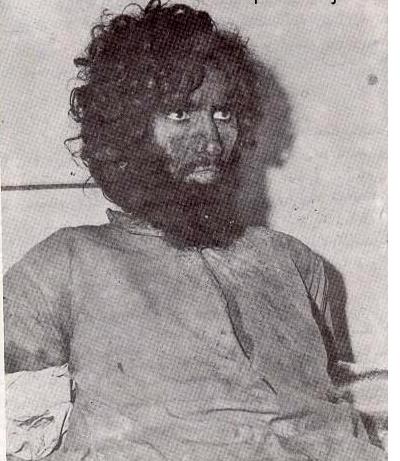
“Militants Seize Mecca” – Marissa Allison, al-Maktabah Blog: https://azelin.wordpress.com/2010/06/09/guest-post-juhayman-al-utaybi-and-the-siege-of-the-grand-mosque-in-mecca/
Thursday June 10:
“Could Al-Qaeda Turn African in the Sahel?” – Jean-Pierre Filiu, Carnegie Endowment for International Peace, Carnegie Papers No. 112: https://www.carnegieendowment.org/files/al_qaeda_sahel.pdf
“Jihād & the Battle of Uncertainty” – Abū Yaḥyā al-Lībī, Al-Fajr Media Center: https://jihadology.net/wp-content/uploads/_pda/2010/06/al-fajr-media-center-presents-a-new-book-by-abu-yahya-al-libi-jihad-the-battle-of-uncertainty.pdf
“Pakistan’s New Networks of Terror” – Imtiaz Gul, Foreign Policy: https://www.foreignpolicy.com/articles/2010/06/10/pakistans_new_networks_of_terror
Friday June 11:
“Muddying the ‘Taliban'” – Brian Fishman, The AfPak Channel: https://afpak.foreignpolicy.com/posts/2010/06/11/muddying_the_taliban

GUEST POST: Juhaymān al 'Utaybī and the Siege of the Grand Mosque in Mecca


NOTE: This is the second guest post at the al-Maktabah – المكتبة Blog. As with all guest posts, the opinions expressed below are those of the guest author and they do not necessarily represent the views of this blogs administrator. That said, I hope you enjoy the post and as always comments are welcomed! In addition, if you are interested in posting an article or research paper feel free to contact me through email.
This guest post is a summary of Marissa Allison’s senior thesis, which focuses on three aspects of the Siege of the Grand Mosque in Mecca. First, Allison describes the intellectual origins of the movement led by Juhaymān al ‘Utaybī. Second, Allison covers the events of the siege, and third, the influence al ‘Utaybī’s thought and movement had on later “jihadist” thinkers and groups. If you would like a full copy of Allison’s senior thesis, which I highly recommend, you can contact her: marissa [dot] allison [at] gmail [dot] com. This post will provide a flavor of Allison’s summary by pasting the introduction below and the rest will be in an embedded Scribd file after the introduction. Also, I would like to acknowledge J.M. Berger of IntelWire who first put us in contact.
Allison is a recent graduate from the University of Mary Washington where she received her B.A. in History and was awarded a certificate in Middle East Studies. This summer, she is studying Arabic in Oman with a Critical Language Scholarship from the State Department and in December, she will also travel to Pakistan as a Research Assistant to Dr. David Cook of Rice University to conduct research on mysticism in radical Islamic groups. While attending Mary Washington, she participated in study abroad programs in Costa Rica, Jordan and Egypt and also traveled to Lebanon, Syria, and Israel. She also served as an Arabic media research intern with the global intelligence network Stirling-Assynt, a research intern at the Palestine-Israel Journal in Jerusalem, and in a Baghdad Embassy virtual internship.

Copyright Notice: The summary paper is copyrighted by Marissa Allison and may not be reproduced or cited without prior permission from the author.
Introduction


Thirty years after Juhayman al-Utaybi stormed the Grand Mosque at Mecca, it remains both one of the most poignant and least understood events in modern Middle Eastern history. Both because of the anniversary of the event and because of a general interest in Islamic militancy rising from the attacks of September 11, a new body of literature on this topic became prominent. This new literature considered this storming of the Grand Mosque as one of the first stepping stones on the road to transnational jihadism, culminating in al-Qaeda’s prominence and September 11. This literature is represented by the most recent book and the only book focusing solely on the topic: The Siege of Mecca by Yaroslav Trofimov.
However, my research portrays the Siege of Mecca in a different light. This research shows that Juhayman al-Utaybi’s movement was Saudi-specific, rather than transnational, and highlights the array of lingering influence of this event both within and outside of Saudi Arabia.
My research covers some of the details of the event, then explains why and how it occurred, and the final and most prominent part will show the great impact that this event has had in the past, and continues to have.

Summary of Senior Thesis- Militants Seize Mecca
[scribd id=32751515 key=key-yta0jctwxmklf4cihah mode=list]

GUEST POST: Response to post on Counter Narrative and AQ

NOTE: I recently received an email from an individual who would like to remain anonymous since he works in the government. In it he provides his own take on my recent blog post about counter narrative strategy and al-Qā’idah. He agreed to allow me to re-post his comments here since I thought it would be fruitful to continue the conversation. The opinions expressed below are those of the guest author and they do not necessarily represent the views of this blogs administrator. That said, I hope you enjoy the post and as always comments are welcomed!

I’m not deep into the theological arguments for or against the Al Qaeda worldview, but I’m a pragmatist and will point out a few things.
1. I really liked Jarret Brachman’s position that Al Qaeda and their associated groups should be labeled “Qutbians” to bluntly insert a human into their idealogy and see how many religious scholars can be found to argue against Qutb.
2. Brachman’s research into the mindset of the jihadist forum readers shows that:

A) Qutb is still the most widely read “theologian” by jihadists (hence calling them Qutbians) by a wide margin.

B) Al Qaeda and their supporters react immediately to threats to their worldview as seen in their responses to the rejection of their ideology by Dr. Fadl and the LIFG.

3. There is already a small counter-narrative as noted above. I don’t believe a U.S. counter-narrative will have a great effect on the current crop of committed jihadists. It may help reduce the number of available recruits but it would more likely affect their support base and erode some supporters.
4. The same philosophy professor who cited the need to agree on definitions in order to engage in constructive debate also stated that you can’t debate belief (faith) because faith has no basis in empirical fact. No matter how you couch your arguments, true believers (i.e. committed jihadists who believe that the non-Muslim world is at war with Islam and who see the world as a binary — dar ul harb or dar ul Islam) cannot be reasoned with because they cling to blind faith. So who is the counter-narrative trying counter?
5. What the U.S. and the Western world says about Al Qaeda and others not being Islamic may have a positive effect and reduce the so-called “home grown” extremists because of the volume of the message locally. What the U.S. and the Western world says about AQ will likely have no effect in Somalia, Yemen, Pakistan, Saudi Arabia, etc. because of the number and volume of voices who denounce the western world.
6. These loud voices are heard from childhood in the madrassas of Pakistan and Saudi Arabia and are a trusted voice compared to the voice of the Western world. Part of the challenge is getting the Muslim world to denounce violent organizations and what seems to occur more often is the Muslim world embracing the violent organizations.
7. The “rehabilitation” programs, as exemplified by the Saudi program, attempts to establish a counter-narrative and to rehabilitate those who see violence against those who do not share their beliefs as a valid program. The Saudi counter-narrative carries more weight than a U.S. counter-narrative would have and the Saudi program boasts an 80-90% success rate… of those that agreed to attend. Even if those percentages are correct, they’re likely misleading. Of the number of people who engaged in “jihad” over the past twenty years (meaning those Muslims who traveled to another country and received combat training), how many actually continued to support violent jihad cause over the long-term? That was a rhetorical question, the number is small. Of the thousands who filtered through training camps in Afghanistan over the decades, only a very small number continued to actively engage in supporting violence. So are the Saudis convincing a bunch of people who aren’t committed to violence to not be committed to violence? Good success rate to publicize with little effect of the overall levels of violence. The hard-core guys never even showed up.
As always, making simplistic blanket statements in a complex world is dangerous, but my gist is that we do need to strike up a counter-narrative, but we must understand that our narrative will have little effect globally without other, more trusted Islamic voices stating the same. Even then, a committed core will continue to decry those Islamic voices as apostates who have joined with the infidels to steal the resources of the true Muslims and to enslave the righteous.