
_____________
Source: Telegram
To inquire about a translation for this video message for a fee email: [email protected]
_____________
Source: Telegram
To inquire about a translation for this video message for a fee email: [email protected]
Monday April 8:
Ideology and armed conflict – Jonathan Leader Maynard, Journal of Peace Research: https://bit.ly/2Ih2GqM
Mapping Criminological Engagements Within Radicalization Studies – Fahad Ahmad and Jeffrey Monaghan, The British Journal of Criminology: https://bit.ly/2lCREDi
Wednesday April 10:
Car Bombs As Weapons of War: ISIS’s Development of SVBIEDS, 2014-2019 – Hugo Kaaman, Middle East Institute: https://bit.ly/2P730JW
Thursday April 11:
An Analysis of the Jaysh Khalid bin al-Waleed Military Database – Aymenn Jawad al-Tamimi, Islamic State Archives: https://bit.ly/2VCI93R
Click the following link for a safe PDF copy: Hay’at Taḥrīr al-Shām — Blessings and Congratulations To Our People in Algeria and Sudan
______________
Source: Telegram
To inquire about a translation for this statement for a fee email: [email protected]
______________
Source: Telegram
For prior parts see: #176, #175, #174, #173, #172, #171, #170, #169, #168, #167, #166, #165, #164, #163, #162, #161, #160, #159, #158, #157, #156, #155, #154, #153, #152, #151, #150, #149, #148, #147, #146, #145, #144, #143, #142, #141, #140, #139, #138, #137, #136, #135, #134, #133, #132, #131, #130, #129, #128, #127, #126, #125, #124, #123, #122, #121, #120, #119, #118, #117, #116, #115, #114, #113, #112, #111, #110, #109, #108, #107, #106, #105, #104, #103, #102, #101, #100, #99, #98, #97, #96, #95, #94, #93, #92, #91, #90, #89, #88, #87, #86, #85, #84, #83, #82, #81, #80, #79, #78, #77, #76, #75, #74, #73, #72, #71, #70, #69, #68, #67, #66, #65, #64, #63, #62, #61, #60, #59, #58, #57, #56, #55, #54, #53, #52, #51, #50, #49, #48, #47, #46, #45, #44, #43, #42, #41, #40, #39, #38, #37, #36, #35, #34, #33, #32, #31, #30, #29, #28, #27, #26, #25, #24, #23, #22, #21, #20, #19, #18, #17, #16, #15, #14, #13, #12, #11, #10, #9, #8, #7, #6, #5, #4, #3, #2, and #1.
—
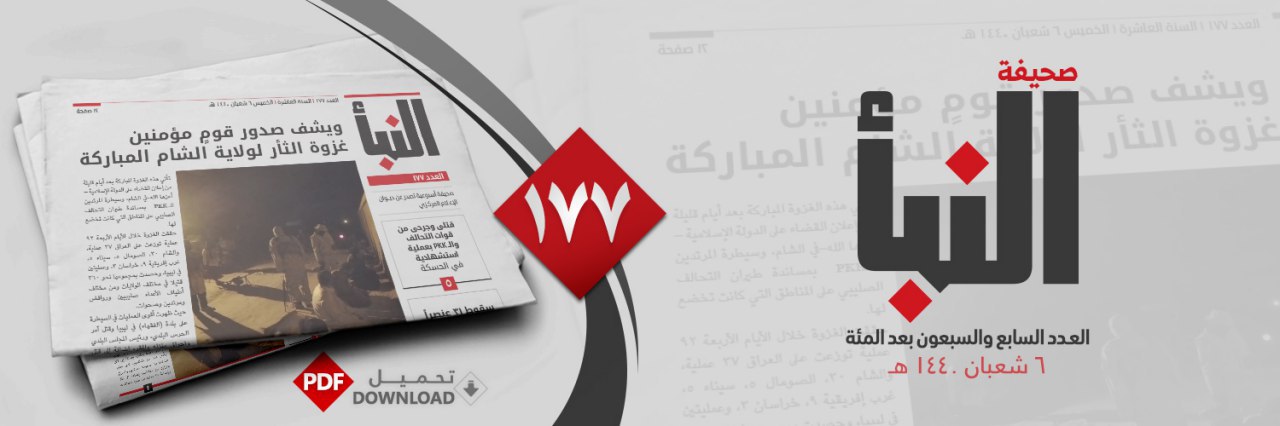
Click the following link for a safe PDF copy: The Islamic State — al-Nabā’ Newsletter #177
_______________
Source: Telegram
To inquire about a translation for this newsletter issue for a fee email: [email protected]
Introduction
It is with great pleasure that I commence this project of the Islamic State Archives in collaboration with Aaron Zelin by presenting an internal database of military personnel for the Islamic State’s southern Syria affiliate Jaysh Khalid bin al-Waleed(“The Army of Khalid bin al-Waleed”- JKBW).
As an introduction for readers, JKBW was formed in May 2016 as a merger between three Syrian jihadi groups: Liwa Shuhada’ al-Yarmouk (“The Yarmouk Martyrs Brigade”), Harakat al-Muthanna al-Islamiya (“The Islamic al-Muthanna Movement”) and Jama’at al-Mujahideen (“The Group of Mujahideen”). The “Khalid bin al-Waleed” aspect of JKBW’s name refers to the Muslim conqueror Khalid bin al-Waleed, who defeated the Byzantines at the Battle of the Yarmouk, a key engagement that resulted in the Muslim conquest of the Levant in the 7th century CE.
The group’s name becomes understandable when one notes that the formation of JKBW took place in the Yarmouk Basin region…
View original post 2,044 more words
On 9 April, IS claimed responsibility for an attack on the town of Fuqaha, in the southern Jufra region. Arriving in as many as 15 vehicles, IS cut off communications to the town, burnt down several houses and executed the head of the municipal guard. Three civilians who had been released from captivity in Ghaduwwa were killed in the incident. In their claim of responsibility, IS said the attack was a part of the “battle of revenge for al-Sham.”
On 1 April, the Misrata Security Directorate reported that its Bomb Disposal Unit had disposed of four tonnes of unexploded ordinances (UXOs) planted by IS in east Sirte in 2016. On 28 March, the Mayor of Sirte, Mukhtar al-Madani, met with representatives of the Danish De-mining Group (DDG) to establish teams to inspect former conflict zones associated with the 2016 IS conflict in order to detected UXOs. On 28 March, a Libyan news media outlet published the testimony of a civilian kidnapped by IS fighters late last year and held captive in a ‘prison’ on a farm in the Ghaduwwa area before being rescued by security forces. The individual recounts being taken in vehicles through the Harouj area and stopping throughout the journey to bury mines. The captive identified the leader of the IS group that kidnapped them as being a ‘Yemeni emir’ who has vowed to launch more raids on Fuqaha. On 25 March, the Sabratha Security Directorate reported it had arrested a suspected IS member. The individual is to be prosecuted but no other information is available at this time. On 9 April, unconfirmed reports suggest Abrek Maazak, also known as “Abrek the Egyptian,” has been released from prison and is participating in the clashes in Tripoli. Maazak is a founding member of Ajdabiya Revolutionaries Shura Council, an Islamist brigade formerly linked with Ansar Al-Sharia and the Benghazi Revolutionaries Shura Council. Maazak had been arrested, along with Saadi Abdullah Abukzim al-Noufali, in October 2017 by Misrata security forces. On 29 March, two al-Qaeda members from Derna were reported to have been arrested in Misrata. The individuals are said to have participated in fighting in Syria with Katibat al-Batar.A weekly update of IS’s actions, the Western response, and developments pertaining to Libya’s other militias is available by subscribing here. To read about Western countries’ responses to IS in Libya this week, click here, and to read about the developments within the anti-IS Coalition of Libyan militias, click here. To read all four sections of this week’s Eye on IS in Libya report, click here.

For prior parts in this video series see: #2 and #1.
—
______________
To inquire about a translation for this video message for a fee email: [email protected]
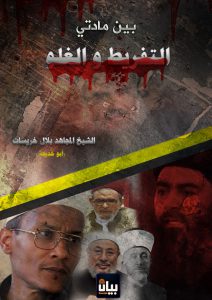
Click the following link for a safe PDF copy: Shaykh Bilāl Khuraysāt (Abū Ḥudhayfah al-‘Urdunī) — Between the Subjects of Negligence and Extremism
_____________
To inquire about a translation for this release for a fee email: [email protected]

Over the past 12 months, Tech Against Terrorism has worked with the academic website Jihadology.net to update it so that particularly sensitive content is only accessible by users with registered academic/research, governmental, journalistic, or humanitarian email addresses. The purpose of this work is to ensure that individuals can still access important primary research material whilst ensuring that jihadis and individuals vulnerable to recruitment are prevented from viewing and downloading the most sensitive content. The update to the website was sponsored by the Global Internet Forum to Counter Terrorism, a tech coalition founded by Twitter, Microsoft, Facebook, and YouTube to responsibly address the spread of terrorist content online.
Background to Jihadology
Jihadology is highly regarded as the internet’s most comprehensive “clearinghouse for jihadiī primary source material and original analysis” and as such Jihadology is considered to be an essential resource for academia and terrorism researchers. Jihadology contains more than 13,000 articles. In total, this amounts to around 750 GB of video.
Background to Tech Against Terrorism
Tech Against Terrorism is an initiative launched by the United Nations Counter Terrorism Executive Directorate (UN CTED) in April 2017 and implemented by the UK-based NGO QuantSpark Foundation. We support the global technology sector in responding to terrorist use of the internet whilst respecting human rights, and we work to promote public-private partnerships to mitigate this threat. Specifically, we work across three pillars: outreach, knowledge-sharing, and technical and operational support. As a public-private partnership, the initiative is supported by the Global Internet Forum to Counter Terrorism and the governments of Spain, Switzerland, and the Republic of Korea.
We work with a broad range of internet platforms that are susceptible to being used by terrorists. We focus on analysing what terrorists want through their use of the internet, with our analysis clearly indicating that an entire tech eco-system is being exploited by terrorists and violent extremists, often in combination. Therefore our work is tech-agnostic and works with companies across all types of technologies, with an explicit focus on supporting smaller tech companies with fewer resources to adequately address the urgent threat of terrorist exploitation. This partnership between Tech Against Terrorism and Jihadology shows the value of providing technical support to smaller internet platforms like Jihadology who do not necessarily have the technical resources to make these changes on their own.
Why are we doing this?
Jihadology is widely regarded as an essential resource for those conducting research on jihadi groups, thanks to its collation of extensive amounts of primary source material produced by such groups. However, there have been concerns that the site is used by jihadis who exploit the fact that material on the site is publicly available. As such, Jihadology wanted to find a way to password protect the most sensitive material. In order to make the site more secure whilst ensuring that the site can remain open and continue to increase understanding of jihadism, we have updated the site with the aim of denying jihadis and those vulnerable to recruitment easy access to the most sensitive content hosted on the site
What are the changes to the updated version?
The updated version of Jihadology restricts access of the primary sources for those that do not have a formal affiliation with an academic/research, governmental, journalistic, or humanitarian institution. Third-party researchers can request special permission to access the password-protected part of the site on a case-by-case basis. The analysis part of the website remains open to anyone.
How do users register?
To ensure that this registration system is used by legitimate researchers, the registration system will accept registrations from recognised email domains only (.edu, .gov, .ac.uk, .gov.au etc). Since researchers with legitimate interest in using Jihadology who do not have such email addresses should still have access to the site, an override function will allow for Jihadology to accept registrations from other email addresses at their discretion. Tech Against Terrorism has also developed warning interstitials to be displayed when accessing harmful content, and restricted visibility of original source URLs and imagery for non-registered users. Jihadology will remain the sole administrator over the website and will not be sharing any data regarding registration with Tech Against Terrorism, the Global Internet Forum to Counter Terrorism, or any governments.
What does this achieve?
This update allows for Jihadology to continue to serve its purpose as the world’s largest clearinghouse for jihadi primary source material and original analysis whilst increasing the site’s capacity to safeguard against exploitation by jihadis. In our view, protecting certain sensitive content whilst making it accessible for research purposes is the best way to do this, and demonstrates that options for responding to terrorist online content do not only consist of removal or complete access.