
Click the following link for a safe PDF copy: Anṣār Ghazwat al-Hind — Security Guidelines For The Mujāhidīn In Kashmir (En)
____________
Source: Telegram
Click the following link for a safe PDF copy: Anṣār Ghazwat al-Hind — Security Guidelines For The Mujāhidīn In Kashmir (En)
____________
Source: Telegram
The title of this release is in reference to Qur’anic verse 9:107. Here it is in full: “And [there are] those [hypocrites] who took for themselves a mosque for causing harm and disbelief and division among the believers and as a station for whoever had warred against God and His Messenger before. And they will surely swear, ‘We intended only the best.’ And God testifies that indeed they are liars.”
—
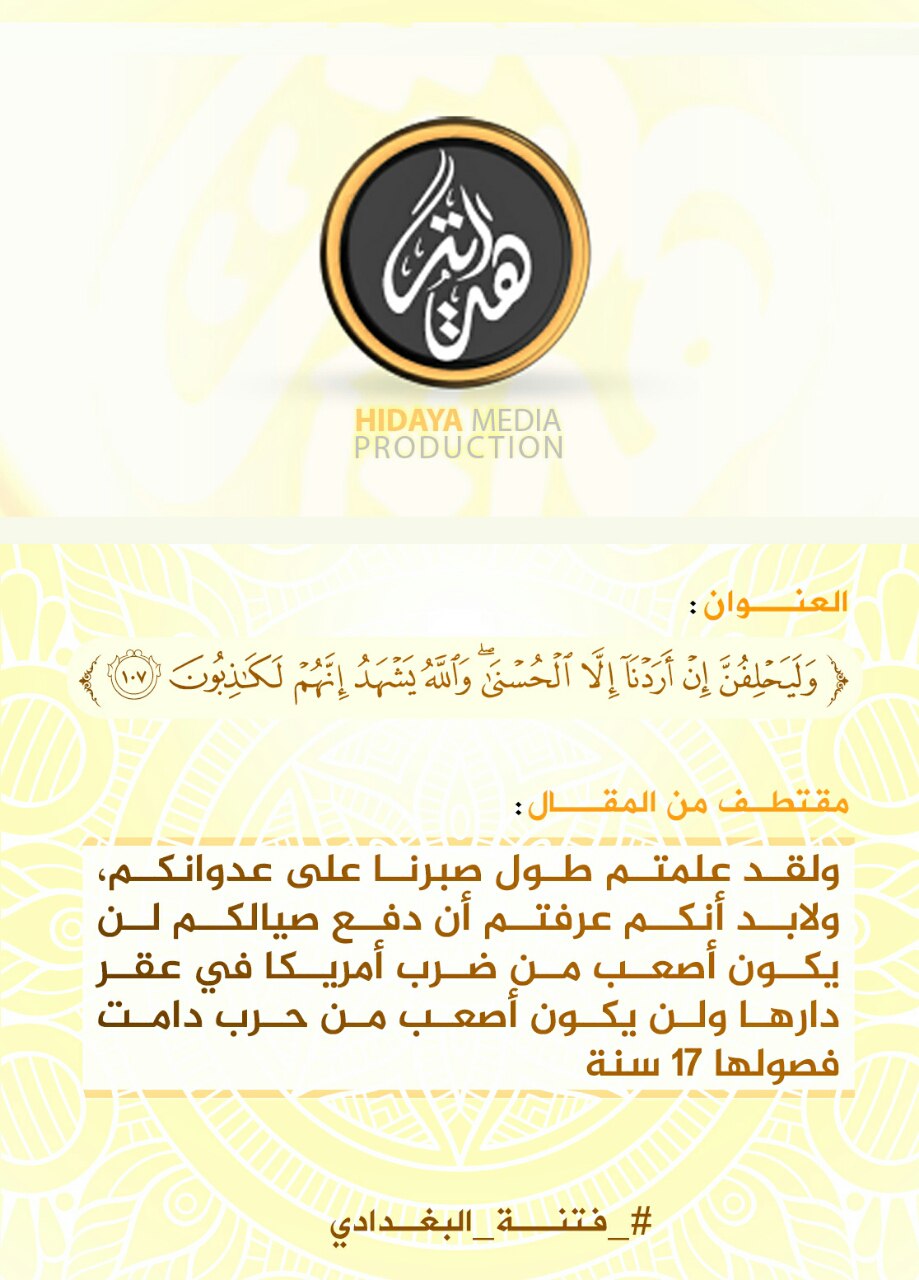
Click the following link for a safe PDF copy: Abū Nūr al-Ṣana’ānī — And They Will Surely Swear, ‘We Intended Only The Best’
___________
Source: Telegram
To inquire about a translation for this release for a fee email: [email protected]
____________
Source: WhatsApp
To inquire about a translation for this audio message for a fee email: [email protected]
___________
To inquire about a translation for this video message for a fee email: [email protected]

__________
Source: Telegram
To inquire about a translation for this video message for a fee email: [email protected]

Over the past few years, the influx of Tunisian fighters to Iraq and Syria has rendered Tunisia practically synonymous with a phenomenon that is still not well understood. This new Policy Note by jihadism expert Aaron Y. Zelin seeks to remedy this gap by quantifying the flow of Tunisian fighters, in particular the recruitment push within Tunisia from 2011 to 2013, and exploring the history of their networks in Iraq over the last decade.
This study examines the motives driving Tunisia’s foreign fighters, the roles they have assumed with jihadi groups in Iraq and Syria, the reasons why many have returned to Tunisia from the battlefield, and the dilemma this poses to the Tunisian state in terms of security and human rights. A deeper understanding of Tunisia’s foreign fighter phenomenon will help situate the trajectory of the jihadist movement both inside and outside the country, while suggesting ways to tackle this challenging issue.
Click here to read the full 34-page paper.

Today a conference about Afghanistan was convened in Geneva. The conference was also attended by Ashraf Ghani along with his team.
During his speech, Ashraf Ghani declared setting up a negotiation team that will talk with the Islamic Emirate. He also forwarded proposals about negotiations that were beyond his capabilities.
The policy of the Islamic Emirate about negotiations is very clear. The Islamic Emirate, as a representative of its nation, is waging war against the American invaders for the past eighteen years.
The Islamic Emirate, as a representative of the valiant Mujahid Afghan nation and as a sovereign entity, is fighting and negotiating with the American invaders for the success of Jihad.
It considers talking to powerless and foreign imposed entities as a waste of time because impotent sides do not possess the capacity of making decision.
The entire world understands that more than half of Afghanistan is under the control of Islamic Emirate whereas the Kabul administration is installed by the Americans and imposed on the Muslim Afghan nation. This regime is neither the government of the Afghan people and neither can it represent the valiant and Mujahid Afghan nation.
Spokesman of Islamic Emirate of Afghanistan
Zabihullah Mujahid
20/03/1440 Hijri Lunar
07/09/1397 Hijri Solar 28/11/2018 Gregorian
_____________
Source: Telegram
____________
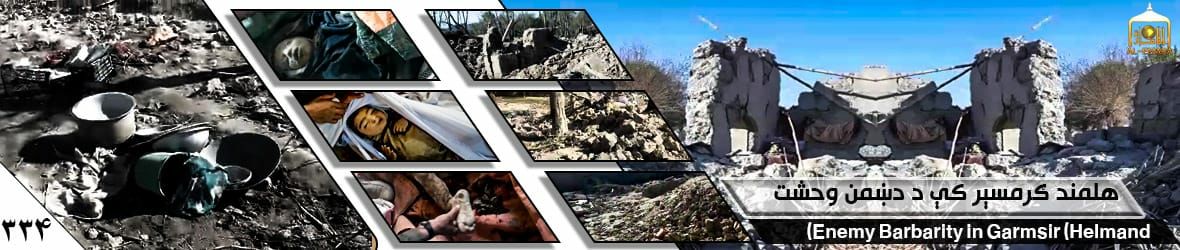
To inquire about a translation for this video message for a fee email: [email protected]
Click the following link for a safe PDF copy: ‘Incite the Believers’ Operations Room — About The Raid ‘Now We Invade Them And They Do Not Invade Us’
___________
Source: Telegram
To inquire about a translation for this statement for a fee email: [email protected]
On 23 November, Islamic State (IS) fighters launched an assault on the town of Tazirbu, an oasis in Libya’s south-east some 250km north-west of Kufra, leaving at least 8 people dead, 11 wounded and 17 kidnapped. Arriving in as many as 15 vehicles the assailants took over a police station for a brief period before withdrawing towards the al-Harouj mountains in Central Libya.
A joint force from the Libyan National Army (LNA) pursued the attackers and engaged them in Wadi al-Hatab, near Zillah. The clashes resulted in 12 IS fighters being killed and three abductees being released.
On 25 November, IS’s Amaq News Agency claimed responsibility for the incident, stating they had killed 29 LNA soldiers and captured multiple police officers, including two Libyan National Army officers. In its statement, IS suggested it fighters targeted particular individuals.
In contrast, the LNA denied that any of its members had been killed and claimed to have killed 18 “terrorists,” destroyed two of their armed vehicles and seized another two.
On 24 November, Special Deterrence Forces (RADA) arrested suspected IS leader Adel Adulhamid in Bani Walid after several hours fighting. Adulhamid is thought to have been involved in human fuel smuggling and returned to Bani Walid after IS lost control of Sirte in late 2016.
On 17 November, the Libyan National Army (LNA) undertook three airstrikes targeting an “al-Qaeda-linked group” suspected to be the Benghazi Defence Brigades (BDB) at Sadada, near Misrata. The LNA claims the group were behind several recent attacks and that a significant number of vehicles and weapons were destroyed during the strikes.A weekly update of IS’s actions, the Western response, and developments pertaining to Libya’s other militias is available by subscribing here. To read about Western countries’ responses to IS in Libya this week, click here, and to read about the developments within the anti-IS Coalition of Libyan militias, click here. To read all four sections of this week’s Eye on IS in Libya report, click here.
